
Class Code Misclassification: The Quiet Margin Killer in PEO Books
How standard exception classes, governing class rules, and division-of-payroll requirements turn small coding errors into loss-fund and pricing problems.
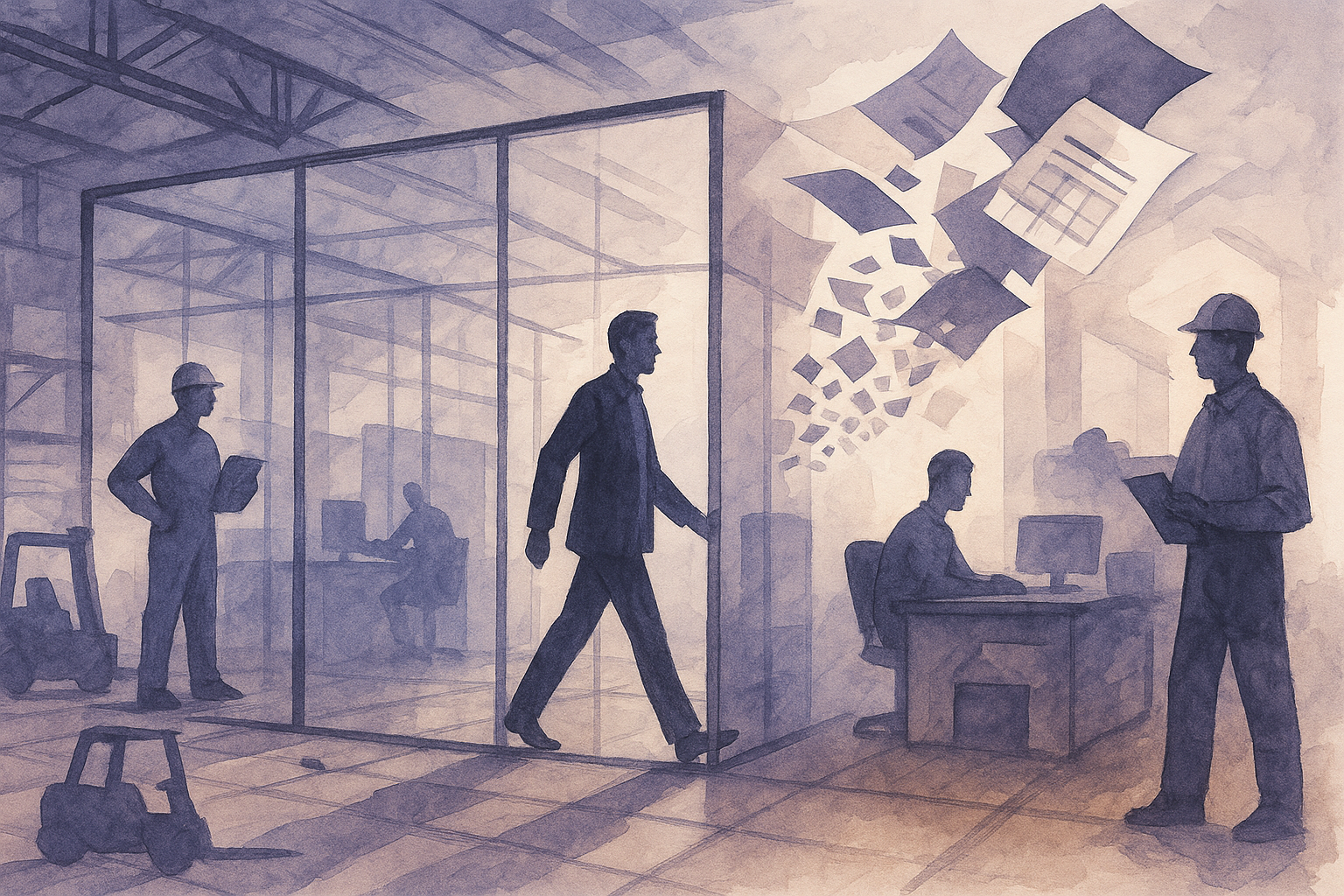
Ask a PEO operator where their workers' comp margin went and they will usually talk about a bad claim. Ask an auditor and they will talk about classification. The claim is visible; it has a number and a date. The classification error is invisible until the premium audit, or until the loss fund comes up short against a book that was priced as if half the warehouse worked in the front office.
This post is about how that happens, what the rules actually say, and why a PEO is more exposed to it than a traditional insured. The rules below are drawn from the NCCI Basic Manual, Rule 1, as published by the North Carolina Rate Bureau's digital library, and from carrier classification guidance. California uses its own Uniform Statistical Reporting Plan with similar logic but different specifics, so where this post says "NCCI," read it as the general case and verify the California detail against the WCIRB's USRP.
The two kinds of classification
Every classification in the manual is either a basic classification or a standard exception. The basic classification describes the business: the manufacturing operation, the construction trade, the store, the service. The standard exceptions describe occupations common to almost every business, and they are not included in the basic classification unless the classification's wording says so.
Under NCCI Rule 1, the standard exceptions are 8810 for clerical office employees, 8871 for clerical telecommuters, 8742 for outside salespersons and collectors, 7380 for drivers and their helpers, and 8748 for automobile salespersons. Each has conditions. Clerical employees under 8810 must perform clerical work only, at a workstation physically separated from the operating hazards of the business by floors, walls, partitions, counters, or similar barriers. An outside salesperson under 8742 sells or collects away from the premises and does not deliver merchandise. A driver under 7380 is assigned that code only if the basic classification does not already include drivers in its wording.
The reason these are called exceptions is that they are low-rated, and the reason they are low-rated is that a person sitting at a desk behind a wall is unlikely to be hurt by a forklift. The moment that person spends part of the day on the warehouse floor, the premise fails.
Governing class and the rule that eats your clerical payroll
The governing classification is the basic classification with the greatest payroll at a location. It matters because it determines where miscellaneous employees go: the local manager, the executive officer who regularly works as a foreman, the maintenance person who does a little of everything. Those people do not get the cheapest code that touches their duties. They get the governing class.
The second rule that catches PEOs is division of payroll. An employer can split one employee's payroll between two classifications only under specific conditions, and Rule 1 is strict about them. An additional operation qualifies for separate classification only if it could exist as a separate business, is physically separated from the principal business, and has separate payroll records. If the employer cannot produce verifiable payroll records specific to a higher-rated operation, the whole payroll, principal and additional, goes to the higher-rated classification. Construction and similar operations are classified separately only if separate records are kept; otherwise everything goes to the highest-rated classification applicable to the job or location.
The practical translation is this. A client that tells you the office manager is "mostly clerical" and spends "maybe a few hours a week" on the shop floor does not have a clerical employee. Unless there are time records that verify the split, the auditor will put that person in the governing class, and the auditor will be right under the rules.
Why PEOs are more exposed than a single insured
A single employer with its own policy misclassifies its own payroll and pays its own audit bill. The error is contained.
A PEO prices hundreds of clients off the class codes each client reported at onboarding, often transcribed from the client's prior policy, which was itself built from what the client told the prior agent. Those codes drive the client's workers' comp charge, the loss fund contribution, the carrier's premium, and the PEO's margin on the account. If the codes are wrong in the client's favor, the PEO is collecting less than the risk warrants from day one, and finding out at the carrier's audit of the master policy, by which point the client has been underpriced for a year and the PEO has absorbed the difference.
The second-order problem is the loss fund. A PEO that funds a large-deductible program calibrates the fund to expected losses, and expected losses are computed from classified payroll. If a meaningful share of the book's payroll sits in 8810 and 8742 when it should sit in the governing classes, the expected losses are understated, the fund is underfunded, and the actual claims arrive from the risk that was really there. The PEO does not see a classification error; it sees a loss ratio that drifted.
The third-order problem is the sales cycle. A PEO rep competing for a prospect against another PEO or against the prospect's current carrier will lose on price to whoever accepts the prospect's optimistic class mix. The winner has not won; they have bought a mispriced account.
The patterns we see most often
Some of this is a matter of judgment, and we are not going to pretend to know how an auditor will treat a specific client. But in our own PEO, and in the books we have reviewed since, the same patterns recur.
The combined role. A dispatcher who also loads trucks. A bookkeeper who also handles will-call. An estimator who also runs crews. Each has been coded to the cheaper half of the job, and none has time records to support a split.
The missing physical separation. A clerical team seated in the corner of the warehouse, with no wall between the desks and the racking. Under the 8810 wording that is not a clerical office, no matter what the employees do all day.
The driver buried in the basic class, or not. Some basic classifications include drivers in their wording and some do not. A client with the wrong assumption either underpays by using 7380 where the governing class already includes drivers at a higher rate, or overpays the other way. Either way the payroll is in the wrong place.
The owner-operator working the floor. An executive officer coded as clerical because he has an office, who also runs the saw every afternoon. Rule 1 puts him in the governing class.
The construction client without job-level time records. Every hour goes to the highest-rated class on the job, and the client is surprised at audit.
None of these are fraud. Most are inherited from a prior policy that nobody questioned. That is exactly why a PEO's underwriting intake has to question them.
What intake should actually check
The fix is not a longer questionnaire. Clients answer questionnaires the way they answered the last agent. The fix is evidence.
At a minimum, the underwriter should see a headcount by job title with a one-line description of what each title does and where, not just a class code and a payroll total. For every employee in a standard exception class, the underwriter should know the physical setup and whether time records exist for any split duties. For any client in construction or with multiple operations, the underwriter should confirm that separate payroll records are maintained before accepting any division of payroll. And the class mix should be compared against the loss runs: a client reporting 60 percent of payroll as clerical and showing three back injuries in the warehouse has told you something about its coding.
Public data helps here too. A client's OSHA inspection history, its O*NET occupational profile for its stated industry, and its own job postings often describe a workforce that does not match the class schedule on the prior policy.
Where the software fits
We built classification review into the underwriting path in HALO IQ rather than leaving it to the audit. When InboxIQ parses a submission, the class schedule from the ACORD 130 and the prior dec page is extracted as structured data and compared against the loss runs and the census. ModIQ's loss-run analysis puts the claims pattern next to the class schedule, so a code whose payroll share does not fit the injuries is visible to the underwriter before pricing, along with the governing-class and standard-exception questions that need answering. CarrierIQ then prices each class against the carrier's actual manual rate, so a corrected class mix shows up as a corrected price while the deal is still a proposal, not after the audit.
That does not make the classification decision for the underwriter. It makes sure the decision gets made on purpose, by someone who has seen the evidence, before the PEO signs the account. In a business where margin is a few points of payroll, that is where the margin lives.
HALO IQ
Underwrite and deliver the proposal in one file.
Submissions, mods, and proposals for PEO operators and brokers, without the spreadsheet handoff.
Was this article helpful?